Business invoices and VAT on a taxi ride: what's on it, and how it works
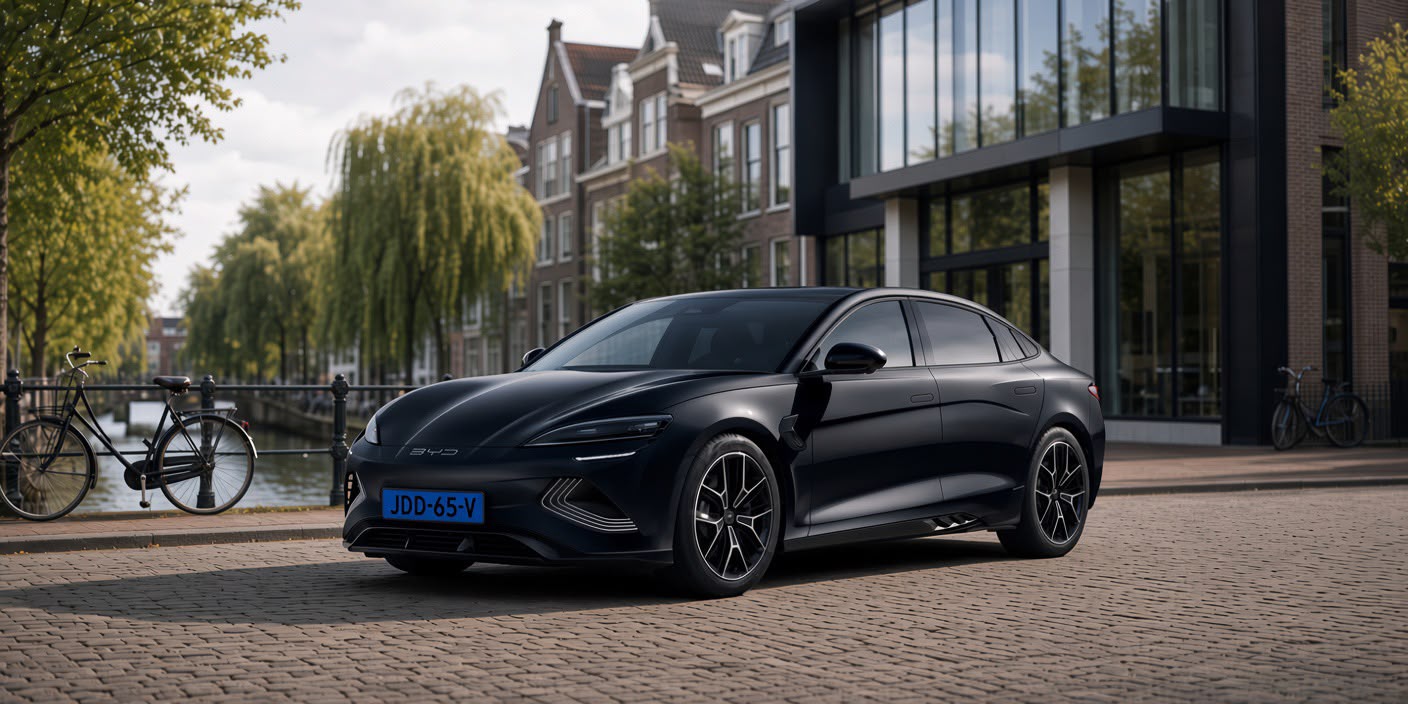
What you'll find on the invoice after a business taxi ride, and why the VAT rate is 9% instead of 21%.
Short answer
Every Future Taxi ride gets an invoice by email automatically once it's finished: invoice number, billing name, amount excl. VAT, 9% VAT and the total incl. VAT. Passenger transport falls under the reduced 9% VAT rate, not the standard 21%. Every price on this site already includes that VAT; the invoice just splits it back out afterwards for bookkeeping.
What's on the invoice
Once a ride is completed, an invoice goes out automatically to the email address on the booking. You don't need to ask for it or call ahead: that happens on every ride, private or business.
That invoice shows an invoice number, the billing name (the company name if you entered one when booking, otherwise your own name), the date, the amount excl. VAT, the VAT shown separately (9%) and the total incl. VAT. At the bottom is Future Taxi's name with its KvK number and VAT identification number, the details a bookkeeping package needs to process the invoice.
Booking has a separate field for the company name, blank by default. Fill it in and that name appears on the invoice instead of your own. An invoice made out to a person doesn't automatically get booked to a company's cost centre; one with the company name on it does.
Why 9% and not 21%
The Netherlands has two VAT rates: 21% for most goods and services, and a reduced rate of 9% for a limited list that includes passenger transport. A taxi ride falls into that second category, alongside the train and the bus. That's why a taxi invoice shows a lower percentage than, say, an invoice for office supplies or a consulting hour.
Every price you see on this site, from the base fare to the fixed Schiphol price, already includes that 9% VAT. It has to: a business selling to consumers has to show the price including VAT, not the price plus VAT as a separate sum. On the invoice we reverse that calculation and split the amount back into the excl. VAT part and the VAT amount.
That conversion always works the same way: the amount excl. VAT is the amount incl. VAT divided by 1.09, rounded to the cent. The VAT is the difference between the two. There's no separate calculation for business rides and another for private ones: every invoice, whatever the amount, is built this way.
A few amounts split out
Four examples based on amounts already on this site, from the minimum fare to the fixed price to Schiphol.
| Ride | Incl. VAT | Excl. VAT | VAT (9%) |
|---|---|---|---|
| Short ride within the city (minimum fare) | € 30.00 | € 27.52 | € 2.48 |
| The Hague Central to Delft city centre | € 58.52 | € 53.69 | € 4.83 |
| The Hague Central to Rotterdam Central | € 97.43 | € 89.39 | € 8.04 |
| The Hague to Schiphol (fixed price) | € 120.00 | € 110.09 | € 9.91 |
Why it happens on the total, not per component
VAT is calculated on the total amount of the ride, not separately on the base fare, the kilometres and the minutes. That keeps the sum simple: one division by 1.09, instead of three small VAT amounts added together that, after rounding, wouldn't quite match the total.
These fares come from the fare table we put together earlier using the same Google traffic data; the VAT split on top of it is new, the underlying fares aren't.
Booking for business, and riding on account
Book a single ride and the invoice works as described above: automatic, per ride, to the email address you enter. For businesses that ride more often, it can also work on account: one invoice a month instead of a separate one for every ride, listing each ride on its own with date, pickup address, destination and amount. That's exactly what a finance team needs to tie a ride to a project or cost centre. Arrange that through the business page, not the regular booking form.
Useful for business travel: the price is fixed before you book, including to Schiphol. That makes a ride easy to approve in advance, even when someone other than the traveller is paying. You know at booking time what will be on the invoice later, instead of finding out afterwards.
Forgot to fill in the company name and the ride hasn't happened yet? WhatsApp or call, and we'll fix it before the invoice goes out.
Frequently asked questions
What's on the Future Taxi invoice?
Invoice number, billing name, date, amount excl. VAT, VAT (9%) and the total incl. VAT, with Future Taxi's KvK number and VAT identification number underneath.
How much VAT do I pay on a taxi ride?
9%, the reduced rate for passenger transport instead of the standard 21%. That VAT is already built into the price you see beforehand.
Can the invoice be made out to my company?
Yes. Fill in the company name in the booking field for it. Leave it blank and the invoice is made out to you personally.
Do I get an invoice automatically, or do I need to ask?
Automatically, by email, right after the ride is completed. You don't need to ask for it separately.
Can I get one invoice a month for multiple rides?
Yes, by arrangement through the business page: riding on account with one monthly invoice instead of one per ride.
Read more
Taxi with children in The Hague: car seats, luggage and what to mention when booking
A child seat isn't required by law in a taxi, and Future Taxi doesn't carry one either. What the rules actually say, what fits next to a stroller, and what's worth mentioning when you book.
Schiphol from The Hague: travel time, distance and cost
How much time should you plan for a taxi to Schiphol, and roughly what does it cost? A practical overview.
Why an electric taxi? The benefits at a glance
Quieter, more comfortable, and no exhaust on the way, what makes an electric car different for your taxi ride.